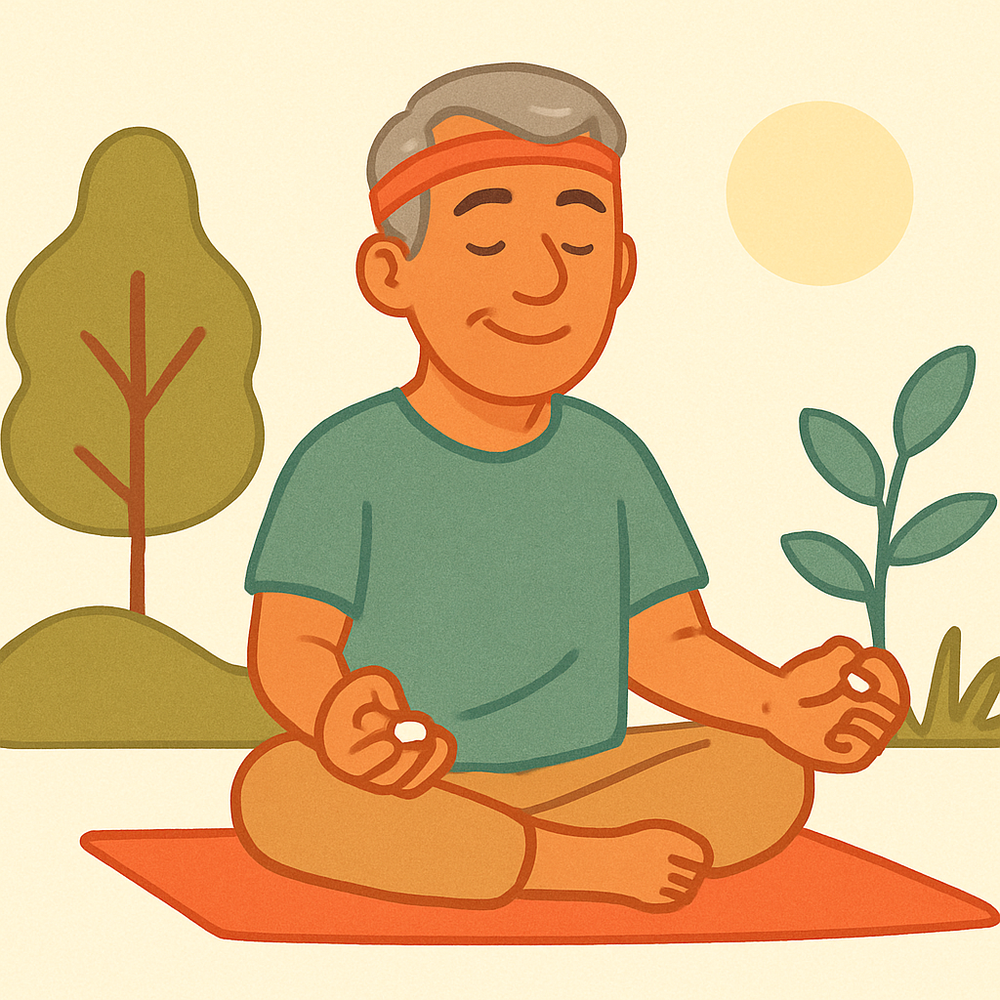
This is a series of three articles Part 1 "Why your Erection is a Window Into Your Heart?" , Part II "How to improve erections?" and Part III "How to do breathwork and core exercises for better sex?"
Embodiment practices, particularly those rooted in yoga, offer a holistic approach to wellness, addressing physical vitality, mental clarity, and deep connection to one's body and soul. These exercises encourage a felt sense of the body, moving beyond intellectual understanding to direct, lived experience.
I. Physical Health and Vitality
Yoga as an embodiment practice strengthens the connection between mind and body, promoting physical health through intentional movement, breath, and posture.
Core Strengthening and Stability
These poses build physical strength, which is fundamental for overall health and supports energy flow throughout the body.
Flexibility and Pain Reduction
Improved flexibility, achieved through consistent practice, can reduce physical tension and chronic pain.
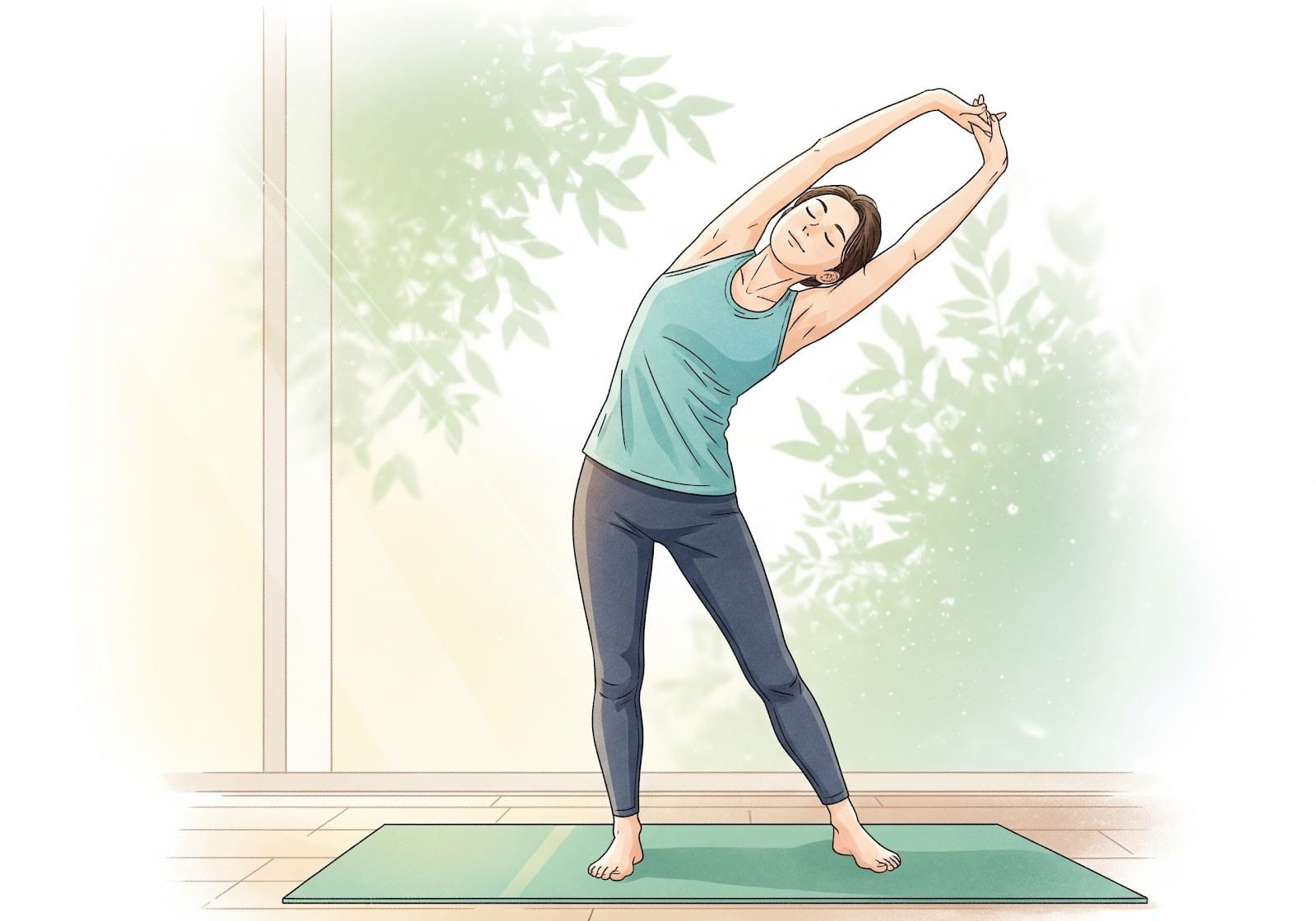
- Triangle Pose (Trikonasana): Stretches the hips, groin, hamstrings, and calves; relieves back pain and stiffness.
- Seated Forward Fold (Paschimottanasana): Stretches the spine, shoulders, and hamstrings; calms the brain and helps relieve stress.
II. Mental Health and Emotional Regulation
Embodiment practices are powerful tools for mental health, helping to regulate the nervous system and foster emotional intelligence.
Breathwork (Pranayama)
Conscious breathing is the bridge between the mind and the body, immediately impacting the nervous system.
Grounding and Presence
Exercises that anchor awareness in the present moment reduce rumination and improve emotional resilience.
- Mountain Pose (Tadasana): A foundational pose for establishing connection to the earth and cultivating stillness. Focus on the four corners of the feet and the gentle sway of the body.
- Body Scan Meditation: Systematically bringing attention to different parts of the body to notice sensations without judgment. This is a crucial practice for increasing interoception (awareness of internal bodily states).
III. Sexual Wellbeing and Intimacy
Embodiment directly relates to sexual wellbeing by improving body awareness, enhancing sensation, and cultivating a non-judgmental relationship with the self.
Pelvic Floor Awareness and Health
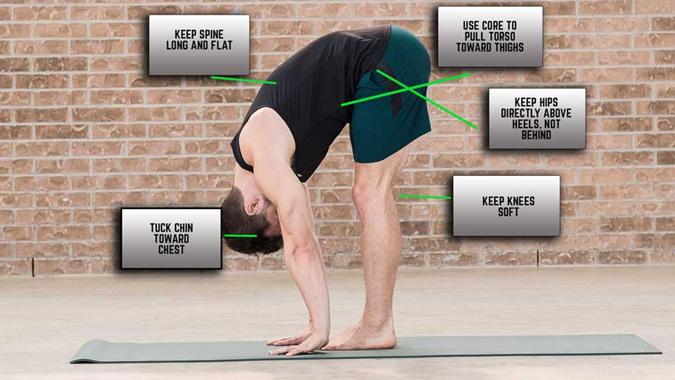
Forward Fold Pose
- Stand in Mountain with your big toes touching and heels about 1in (2.5cm) apart.
- Inhale to lift arms overhead, then exhale as you hinge at the hips and squeeze torso toward upper thighs. Let fingertips move toward the floor.
- Tuck chin to chest, looking backward to lengthen back of neck. Maintain a flat back by firmly engaging abs and squeezing inner thighs.
- Hold the posture, inhaling as you lengthen the spine, and exhaling as you fold deeper.
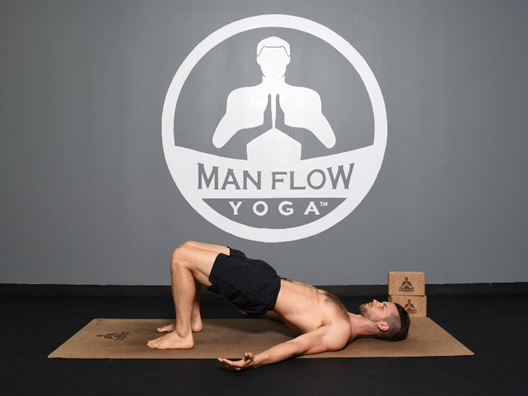
Bridge Pose (Setu Bandhasana)
While Bridge pose is a core strength builder, its application here is about enhancing pelvic mobility and stamina during intimacy. It takes two to tango, so even if you’re on bottom you’re going to need to help your partner out while they are on top. Bridge helps you replicate the motion of lifting your body off the ground while lying on your back. The result will be a partner who’s satisfied because they aren’t doing all the work and a deeper connection because both of your bodies are moving.
Technique:
- Lie on your back and rest your arms at your sides, palms facing up.
- Bend your knees and plant your feet hip-width distance apart, no more than a few inches away from glutes.
- Tighten abs and engage core as you prepare to lift your hips.
- On an exhale, lift your hips slowly but firmly away from the floor.
- Squeeze the hips, glutes, and core to form a straight line from shoulders to knees.
- Reach your tailbone toward your knees to lengthen the spine.
- Hold the posture, inhaling as you lift your hips higher, and exhaling as you tighten your core.
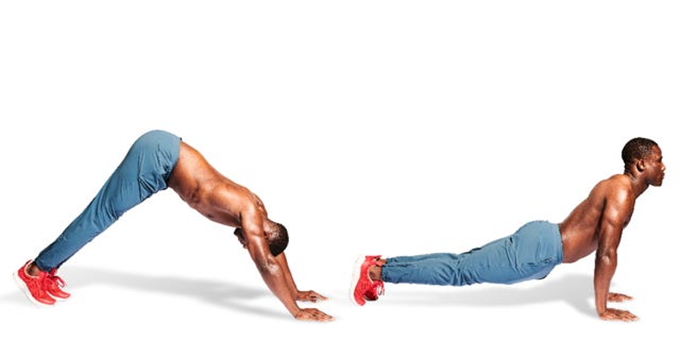
Cat-Cow Pose (Marjaryasana-Bitilasana)
Cat-Cow is essential for spinal and pelvic fluidity, promoting the coordination of breath and movement that translates to embodied presence.
Technique
- Push your hips up to the sky (A).
- Flex at the elbows, lowering your nose to the ground between your hands.
- Shift your weight forward.
- Push the ground away until your hips are on the floor and your torso is upright (B).
- Reverse this movement and repeat, finding a rhythm.
Butterfly Sit-up
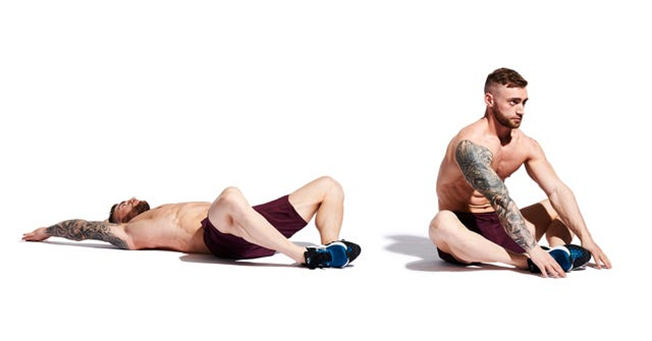
- Lie on your back with your legs bent and your soles together. Place your hands behind your head (A).
- Tense your abdominal muscles and lift up, touching your hands to your feet (B).
- Reverse the move, returning to the start position, touching the floor behind your head on each repetition.
Uddiyana Bandha (Abdominal Lock)
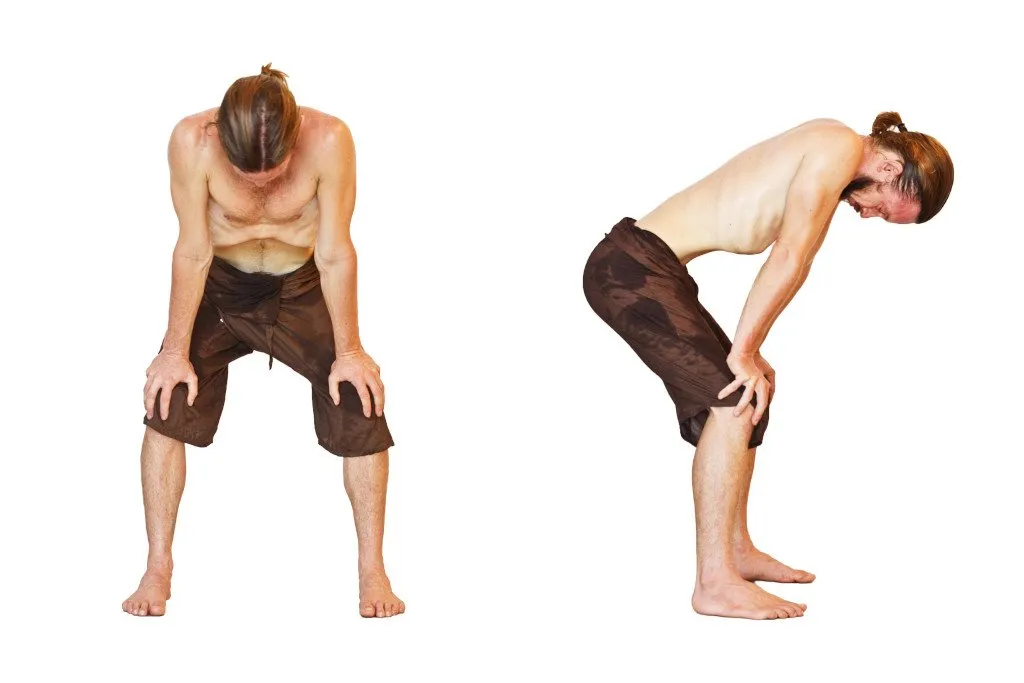
This advanced practice involves a deep internal lift that can enhance energy flow (prana) and internal sensation, directly relating to the subtle energy of sexual response. Uddiyana Bandha, also referred to as the abdominal lock, involves a subtle yet powerful engagement of the abdominal muscles, creating a gentle lift that resonates through the body’s energy systems. This practice works as a bridge between the physical and subtle realms, helping in the awakening of internal energies. The pelvic floor is central to both stability and sexual response. These exercises enhance control and sensation in this area.
Step-by-Step Instructions
Starting position
- Stand with the knees slightly bent (as in skiing) and the feet wider than hip-distance.
- Place the hands on the thighs above the knees, with the fingers facing inwards.
- The body is bent slightly forward so that the weight of the torso is supported on the hands.
Exhalation
- First, inhale deeply through the nose.
- Exhale completely (through the mouth or nose) while bending forward at the hips with knees and elbows bent.
- Contract the abdominal muscles in order to push as much air as possible out of the lungs.
Void Retention
- Holding the void retention (without letting any air enter the lungs), completely relax the abdomen and bring the body back to its initial position.
- Perform a "false inhalation". This means that no air is drawn in, but the ribcage is expanded as in a normal inhalation. This action sucks the abdominal muscles and organs up into the thorax and hollows out the belly.
- If you experience any unpleasant pressure in the throat, tuck the chin towards the chest. Many yogis recommend Jalandhara Bandha (the contraction and locking of the throat area) to be performed during Uddiyana Bandha.
- Hold the void retention for as long as feels comfortable. Always be careful not to hold the retention too long, so that a sudden and chaotic inhalation becomes necessary due to the intense shortage of air. For beginners, a few seconds are enough. With practice, you can gradually increase the duration of the void retention.
- When finishing, first release the abdomen before inhaling.
Inhalation
- With awareness, relax the diaphragm which will come down and bring the abdomen back to its normal position.
- Then, inhale through the nose, letting the air gently enter the lungs. Never breathe in without first releasing the seal of the diaphragm – taking in air while holding Uddiyana Bandha is very uncomfortable and possibly dangerous, as its violent entrance into the lungs can affect the fine alveolar membranes.
- After inhaling, hold your breath (full retention) for around 20 seconds or as long as feels comfortable to further acknowledge the energetic shifts in your body. This completes one round. You may repeat for 3-5 rounds.
Jalandhara Bandha (Throat Lock)
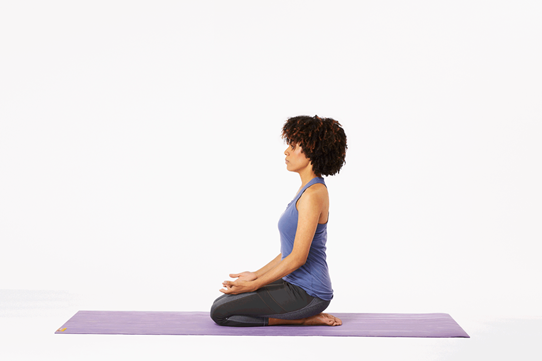
This practice, also known as the Throat Lock, gently compresses the throat, regulating the flow of energy to the head and helping to calm the nervous system. While less directly focused on sexual organs than Mula Bandha or Uddiyana Bandha, it contributes to overall energetic balance and deep relaxation, which is foundational for embodied intimacy.
Step-by-Step Instructions
- Begin by sitting in a comfortable cross-legged position.
- Place your hands on your knees with the palms facing upwards. Inhale so your lungs are about two-thirds full, and then retain your breath.
- Drop your chin down and draw it back closer to your chest making a double chin. At the same time, lift your sternum towards your chin. As your chin drops toward your sternum with breath exhaled, swallow. This will help to activate this bandha. Relax your shoulders away from your ears and enjoy the stillness.
- Hold as long as is comfortable and then lift your chin up and finish your inhalation before releasing the breath.
Kegel Exercises (Mula Bandha): Gentle contractions and releases of the pelvic floor muscles. Focus: Isolating the muscles used to stop the flow of urine.
Hip and Pelvic Flexibility
Hip-opening poses are crucial for releasing stored emotional tension and increasing circulation in the pelvic region, enhancing sensation and flow.
Hip Flexor Stretch
Recommended hold: 30-45 secs each sideWhy I like it: This is a great choice for runners who are looking to improve their stride length. It’s also a useful exercise to counteract the curvature of the lower spine, particularly for those who have desk-bound jobs.
- Kneel on a mat with both knees, then place one foot forward so that you have a 90-degree angle at the hip and knee
- Keeping your torso upright, lean forward until you feel a stretch through your groin and into your hip flexors
- To increase the stretch in your hip flexor, you can also tilt your pelvis under and squeeze your glute
Butterfly Stretch
Recommended hold: 30 secsWhy I like it: This is a really effective exercise if you are experiencing tension or tightness in the groin. It’s also useful for improving flexibility of the inner thigh adductor muscles and reducing lower back pain.
- Start in the seated position. Have the soles of your feet together and bend your knees
- Gently place your palms on the inside of your lower thighs and apply pressure until you feel the stretch in your groin
- Be sure to also lengthen your spine and torso
Wide Seated Forward Stretch
Recommended hold: 45-60 secsWhy I like it: Done properly, you’ll feel the stretch from this forward bend through your hamstrings, hips, lower back, spine, inner thighs and groin. It’s great preparation for wider-legged stretches and deeper bends too.
- Start in the seated position with your legs wide and straight
- Lengthen up through your spine
- Bend forward from your hips and place your hands between your legs on the floor
- Slowly exhale as you start to walk your hands forward.
Cow’s Face Pose (Gomukhasana)
Recommended hold: 30-60 seconds each sideWhy I like it: If you want to mobilize your hip and knee joints simultaneously, I recommend trying the cow’s face pose. It really helps open your chest out and brings your shoulders into play too.
- From a seated position, with legs bent towards you, cross your right leg on top of your left leg, then guide each ankle towards the opposite hip. Your knees should be stacked on top of one another (NOTE: if this is too intense on your knees or hips, straighten the bottom leg)
- Either leave your arms by your sides or try a shoulder stretch here, by bending one arm up behind your head and the other arm down behind your back. Try to reach the fingers towards one another, or hold onto a strap
- Hold here, then repeat on the other side, this time crossing the left leg on top of the right