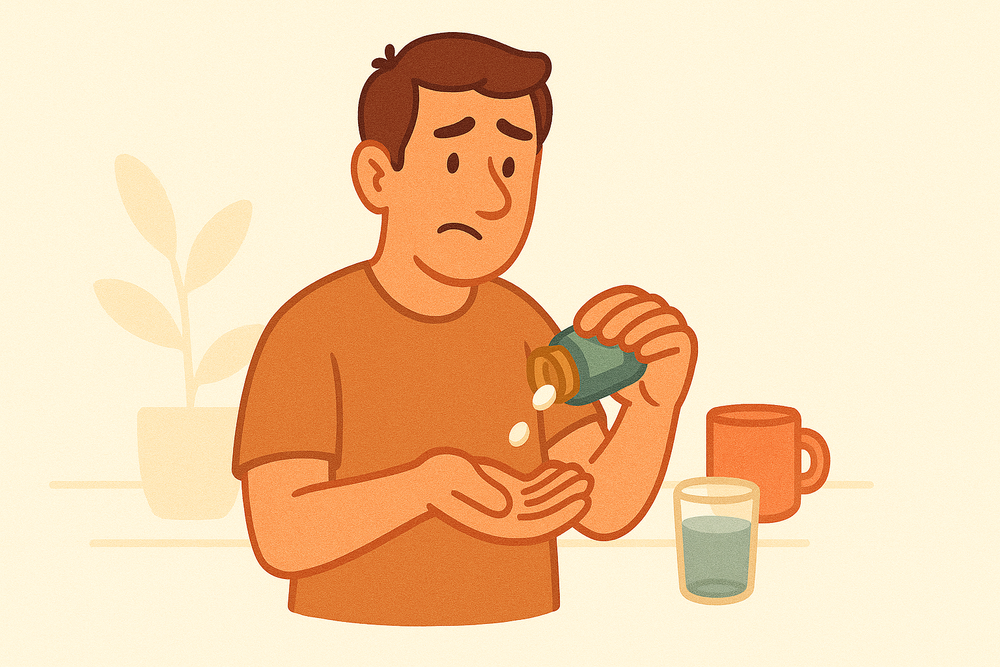
That pill you take every morning might be the reason things aren't working the way they used to. Here are the usual suspects.
Important: this article is for information only and is not a substitute for advice from your GP or specialist. Never stop or change a prescribed medication without discussing it with your doctor first. The goal here is to give you the knowledge to have a better conversation with your prescriber — not to make medication decisions on your own.
Right. With that out of the way.
It's estimated that up to 25% of all erectile dysfunction is related to medication use — and the good news is that much of it may be reversible. The problem is that most blokes don't make the connection. They assume the issue is age, or stress, or something wrong with them, when the actual culprit is sitting in the pill organiser on the kitchen bench.
Here are the drug classes most commonly linked to sexual dysfunction, what they do, and what the alternatives look like.
Antidepressants (SSRIs and SNRIs)
These are the biggest offenders. SSRIs block presynaptic serotonin reuptake, increasing serotonin levels — which is great for mood but interferes with the brain chemicals involved in arousal, erection, and orgasm. Sertraline (Zoloft), fluoxetine (Prozac), escitalopram (Lexapro), and paroxetine (Paxil) are among the most commonly prescribed — and most commonly implicated. Side effects range from reduced libido to delayed or absent orgasm to full erectile dysfunction.
Neuropsychiatric medications were responsible for nearly 40% of all reported ED cases in a ten-year analysis of the US adverse event reporting database.
The conversation to have: Ask your GP about dose reduction (sexual side effects are often dose-dependent), switching to an antidepressant with a lower sexual side-effect profile (bupropion and mirtazapine are two that tend to preserve sexual function), or adding a PDE5 inhibitor like tadalafil to counteract the erectile effects while staying on the antidepressant. The mental health condition being treated matters too — don't sacrifice stability for sexual function without proper guidance.
Blood Pressure Medications
Thiazide diuretics are the most common cause of erectile dysfunction among blood pressure medicines. The next most common cause is beta blockers. Older, non-selective beta blockers like atenolol and propranolol are the worst culprits. They reduce blood flow, lower heart rate, and can suppress testosterone — a triple hit to erectile function.
The conversation to have: If the medication can be switched, angiotensin receptor blockers (ARBs) or ACE inhibitors are generally preferred — they're effective for blood pressure but have a neutral or even mildly beneficial effect on sexual function. Newer beta blockers like nebivolol may actually improve erectile function via nitric oxide release. The switch is often straightforward and equally effective for blood pressure control.
Finasteride and Dutasteride (Hair Loss / Prostate Drugs)
These 5-alpha reductase inhibitors block the conversion of testosterone to DHT. That's the mechanism that helps with hair loss and prostate size — but DHT is also involved in libido and sexual function. They suppress libido in about 10% of men, but these effects are much more pronounced in younger blokes.
The conversation to have: If you're taking finasteride for hair loss and experiencing sexual side effects, it's a cosmetic-versus-function trade-off worth discussing openly. Topical minoxidil or low-dose topical finasteride may preserve hair without the systemic hormonal effects. If you're on it for BPH (enlarged prostate), your urologist can weigh alternatives.
Opioids and Chronic Pain Medications
This one is increasingly relevant as chronic pain prescriptions remain common. Chronic opioid use is strongly associated with ED, with prevalence rates reaching 21–52% among users, often at younger ages than in the general population. The mechanism is blunt: opioids suppress the entire hormonal axis that drives testosterone production, while also dampening central nervous system signalling for arousal.
The conversation to have: If you're on long-term opioids, ask your GP about checking your testosterone levels — opioid-induced hypogonadism is common and treatable. Pain management itself may benefit from a broader approach: physiotherapy, exercise physiology, non-opioid medications, or interventional pain management. Getting off opioids (where safely possible) often restores sexual function.
Antipsychotics
All antipsychotic drugs block dopamine — the brain chemical involved in reward, pleasure, and arousal. They also increase prolactin, which can lead to ED, reduced libido, and difficulty achieving orgasm. The incidence of sexual dysfunction with antipsychotics ranges from 45% to as high as 90% in some studies. That's not a rare side effect — it's a near-certainty.
The conversation to have: This one requires particular care, because the conditions being treated are serious. But second-generation (atypical) antipsychotics generally cause fewer sexual side effects than older drugs — with the exception of risperidone, which is worse than most. Your psychiatrist can review options. Never adjust antipsychotic medication without specialist involvement.
Benzodiazepines and Sleep Medications
Xanax, Valium, temazepam — benzodiazepines enhance GABA-A receptor activity, which suppresses central arousal and reduces penile erection. They may also alter the hormonal axis, reducing testosterone. The effects are dose- and duration-dependent, meaning the longer you're on them, the worse it gets.
The conversation to have: Long-term benzodiazepine use is problematic for many reasons beyond sexual function. If you're on them for sleep or anxiety, ask about tapering strategies and alternative approaches — CBT for insomnia, for example, has better long-term outcomes than medication for most people.
The Quiet Ones
A few other categories worth flagging: antihistamines (yes, even over-the-counter ones like cetirizine and diphenhydramine can affect erectile function), H2 blockers for reflux (particularly cimetidine at high doses), anticonvulsants used for epilepsy or neuropathic pain, and — somewhat controversially — statins, which may interfere with sex hormone production through their cholesterol-lowering mechanism, though the evidence is mixed and the cardiovascular benefits usually outweigh the concern.
The Extended List
Beyond the main offenders, these medication classes have also been associated with sexual dysfunction — some well-established, others with emerging evidence:
Hormone-related: antiandrogens used in prostate cancer (bicalutamide, enzalutamide), GnRH agonists (leuprorelin, degarelix), spironolactone (which has antiandrogenic effects even when prescribed for heart failure or acne), and long-term corticosteroids like prednisone.
Pain and neurological: gabapentin and pregabalin (increasingly common for neuropathic pain), long-term NSAIDs (emerging evidence for hormonal disruption), and chemotherapy agents broadly.
Cardiac: digoxin for heart failure, and alpha-blockers like tamsulosin for BPH — the latter more commonly causes ejaculatory dysfunction than ED, but it's still a sexual side effect most blokes aren't warned about.
Other: isotretinoin (Accutane) for severe acne, methotrexate and other immunosuppressants, and — worth a mention — anabolic steroids. The irony is real: while on cycle, libido may spike, but the resulting testicular suppression can crater sexual function once you stop, sometimes for months.
The couple's angle: the oral contraceptive pill can reduce libido and lubrication in female partners, which affects the sexual dynamic for both of you. If your partner has noticed changes since starting or switching contraception, that's worth raising with her GP too.
None of these are reasons to panic or stop a medication. All of them are reasons to have the conversation.
What to Actually Do
The pattern across all of these is the same: the medication is doing something useful, but it's also doing something to your sexual function that nobody mentioned when you started taking it. The fix isn't to stop the medication. The fix is to have an informed conversation with your doctor about whether there's an equally effective alternative with fewer sexual side effects, whether a dose adjustment might help, or whether adding a treatment for sexual function (like a PDE5 inhibitor) alongside the existing medication makes sense.
That conversation requires you to bring it up — because your doctor probably won't. Not because they don't care, but because sexual function isn't on most standard review checklists, and many patients are too embarrassed to mention it. Be the one who raises it. A simple "I've noticed some changes in my sexual function since starting this medication — can we talk about options?" is all it takes.
Your medications are keeping you alive and well. Your sexual function matters too. The two don't have to be mutually exclusive.