You can nail your macros, optimise your sleep, and still miss the thing that matters most.
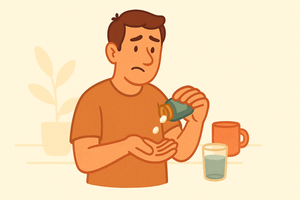
You've got your protein sorted. You're training three or four days a week. You've swapped the beers for soda water (mostly). Your bloods came back fine. By every measurable standard, you're doing the right stuff.
So why do you sometimes feel like you're running on a treadmill — literally and figuratively — without actually going anywhere?
Here's a thought: maybe the most important health variable you have isn't on any blood test.
Feeling Good vs. Living Well
Modern men's health is mostly about inputs. Hormones, macros, steps, sleep scores. That stuff matters — I'm not going to pretend it doesn't. But somewhere along the way, we started treating health like a car service. Check the oil, rotate the tyres, top up the fluids, done.

The thing is, you're not a Hilux. You're a human. And humans need something cars don't.
Purpose.
Not in a motivational-poster, "live your best life" kind of way. Purpose in the way that researchers have actually been measuring it for decades — a sustained sense that your life has direction, that what you do matters, and that you're building toward something beyond your own comfort.
The ancient Greeks had a word for this: eudaemonia (you-die-MOH-nee-ah). It gets translated as "happiness," but that's a terrible translation. What Aristotle actually meant was closer to flourishing — not how you feel on a Friday arvo, but the quality and direction of your whole life.
He drew a hard line between eudaemonia and hedonia — the pursuit of pleasure. He didn't think pleasure was bad. He just thought it was insufficient. A life of pure comfort, however well-optimised, was missing something essential.
Turns out he was right. And the data is surprisingly strong.
The Research Is Pretty Wild
A meta-analysis pooling over 136,000 people found that a strong sense of purpose was linked to a 17% lower risk of dying from any cause. Seventeen percent. That's in the same ballpark as the benefit we attribute to regular exercise in most observational studies.
A large US study of adults over 50 found that men in the highest bracket for life purpose had a 20% lower mortality risk compared to the lowest bracket — even after adjusting for age, smoking, physical activity, BMI, and chronic disease.
And here's the kicker: when researchers looked at biological markers, eudaemonic wellbeing — purpose, personal growth, quality relationships — was associated with lower cortisol, lower inflammatory markers, lower cardiovascular risk, and better sleep. Hedonic wellbeing — just feeling happy — barely moved the needle on those same markers.
So feeling good and functioning well aren't the same thing biologically. The bloke who's smashing UberEats and Netflix every night might report high life satisfaction. But the bloke who's coaching his kid's rugby team, building something at work he actually cares about, and maintaining a few proper friendships? He's probably getting more physiological protection — even if his Friday night is less fun.

Mates Actually Keep You Alive
This is the part that should worry a lot of Aussie and Kiwi men.
A massive 2023 review — 90 studies, over 2.2 million people — found that social isolation was linked to a 32% higher risk of dying from any cause. Loneliness carried a 14% increase. Those numbers held across gender and geography.
To put that in perspective: the mortality risk of being socially isolated is roughly comparable to smoking 15 cigarettes a day. It's bigger than the risk of obesity. Bigger than the risk of physical inactivity.
Think about the bloke who trains six days a week, eats clean, takes every supplement going — but hasn't had a proper conversation with a mate in three months. From a longevity standpoint, he's carrying a risk factor at least as dangerous as the things he's working so hard to fix.
Here's the uncomfortable truth for a lot of men: after 30, friendships take deliberate effort. Your mates from uni scatter. Work gets busy. Kids arrive. The pub sessions thin out. And unlike women, most men don't have a natural replacement structure. You don't join a book club. You don't text your friends to check in. You just… drift.
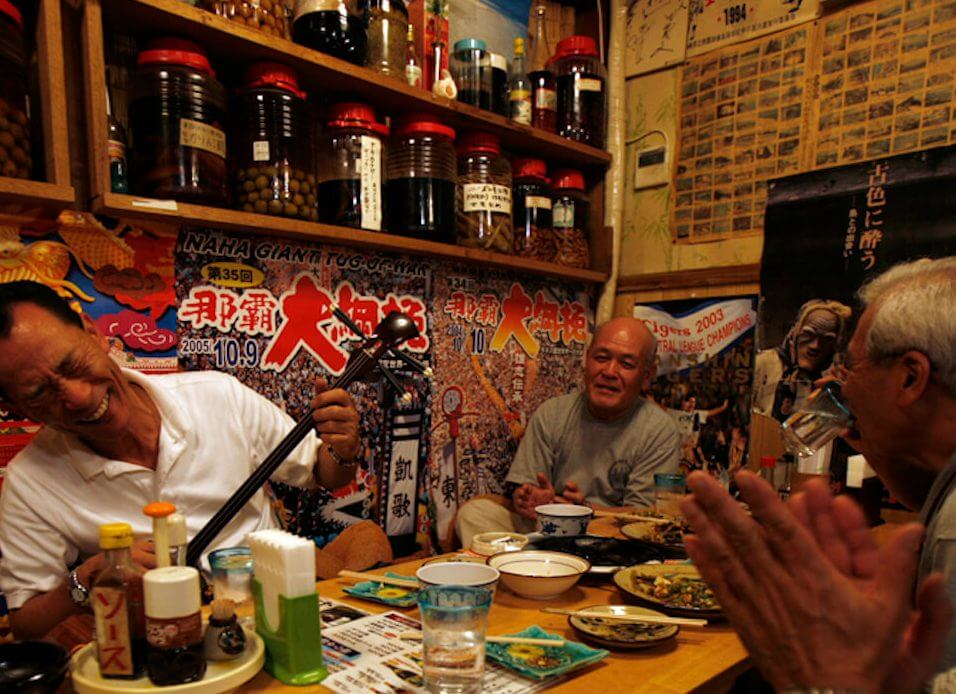
In Okinawa, they have a tradition called moai — a group of lifelong friends who meet regularly, support each other financially and emotionally, and stay connected from childhood into old age. It's basically a formalised version of what we all know works but are too lazy or embarrassed to set up.
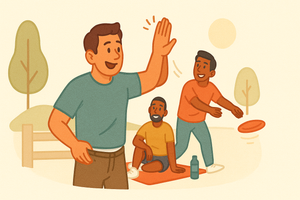
You don't need to call it a moai. Call it a fishing trip. A weekly poker game. A standing coffee catch-up with three blokes you actually trust. The structure doesn't matter. The regularity and depth does.
The Ikigai Angle
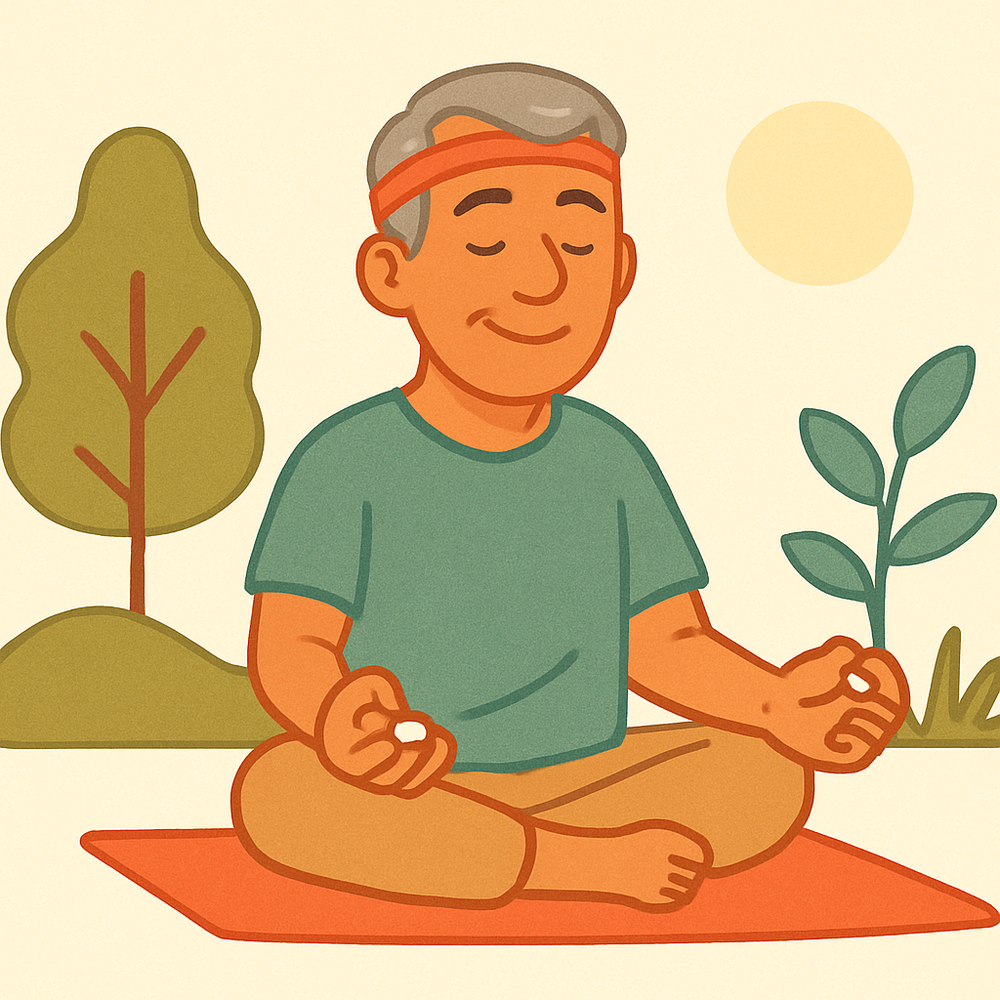
The Japanese also have a concept called ikigai — roughly translated as "the reason you get out of bed in the morning." In Okinawa, elders can usually tell you theirs without hesitation. It's rarely anything grand. Tending a garden. Teaching a grandchild something. Maintaining a community tradition.
Now, a caveat: the "Blue Zones" narrative has copped legitimate criticism. Some researchers have pointed out that the centenarian data from these regions may be inflated by dodgy birth records. And modern Okinawa has some of the highest obesity rates in Japan. So let's not romanticise it.
But the concept of ikigai holds up independently of the demographic claims, because we already have prospective data showing that purpose predicts better health outcomes across large populations. Whether you call it ikigai, eudaemonia, or "having a reason to get out of bed," it works.
Four Things Worth Getting Right
Aristotle boiled it down to four practical virtues. Updated for 2026, they still hold up surprisingly well.
Wisdom. Not intelligence — judgement. Knowing when to push and when to pull back. When a supplement is worth trying and when it's marketing dressed up as science. The bloke who reads the room before opening his mouth. In health terms: engaging with your own wellbeing as a thinking participant, not a passive consumer of whatever Instagram tells you to do.

Courage. Not fearlessness — doing the right thing despite being scared. Telling your GP you're struggling. Having the conversation with your partner that you've been avoiding for six months. Getting the screening test you keep putting off. Courage is the virtue most often demanded of men and least often acknowledged when they exercise it quietly.
Temperance. Self-regulation without self-punishment. The bloke who can train hard and rest properly. Eat well during the week and enjoy a lamb roast on Sunday without guilt. Have two beers at the BBQ and stop there. In longevity terms, temperance is sustainability — the best health protocol is the one you'll still be doing in ten years, not the one that sounds impressive for three weeks.
Justice. Showing up for others. Coaching your kid's team even when you're tired. Checking in on a mate who's gone quiet. Contributing to your whānau, your community, your workplace. This is the virtue that connects the individual to the social — and as we've seen, the social is where a huge chunk of the health protection actually lives.
So What Do You Actually Do With This?
Fair question. Here are three things worth trying.
Audit your social architecture. How many men do you have genuine, reciprocal relationships with — not blokes you drink with, but men who'd call you at 2am if they were in trouble? If that number is zero or one, that's a modifiable risk factor at least as important as your lipid profile.
Reframe your health behaviours. Training matters. But training so you can carry your kids around Queenstown without being wrecked recruits a deeper motivation than training to hit a deadlift PR. Eating well matters. But eating well so you're sharp enough to make good decisions at work and present enough to be a decent partner at home lasts longer than any cut.
The what stays the same. The why changes everything.
Ask yourself one uncomfortable question. If you looked back at 80, what would you regret not having built, done, or become? If you can answer that clearly, you've got something most men don't — and it might be more protective than any supplement in your cupboard.
The Bottom Line
Your bloods, your body comp, your VO₂ max — those things matter. But they're inputs, not outcomes.
The outcome is a life well lived. Training hard so you're capable and independent into old age. Managing stress so you can think clearly and treat people well. Building friendships that sustain you through the hard years. Having a reason to get up tomorrow that's bigger than your to-do list.
The Greeks called it eudaemonia. The Japanese call it ikigai. The epidemiologists call it a protective factor. And most men — if they're honest — already know it's what they're actually after.
Not just a longer life. A better one.
The question isn't just how long you live. It's what kind of man you're becoming while you do.