Sexspan: The Health Metric Nobody Talks About
You've heard of lifespan. You've probably heard of healthspan. But the one that actually gets blokes to pay attention? That's sexspan.
Dr Mohit Khera is a Professor of Urology at Baylor College of Medicine, President of the Sexual Medicine Society of North America, and one of the most published sexual health researchers in the world. He's spent years developing a concept that reframes how we think about male health — and it starts with a question most doctors never ask.
How long do you expect to be sexually active?
Most of us are focusing on our healthspan and our lifespan, but we also need to think about our sexspan — the portion of your life where you'll have the ability and desire to engage in satisfying sexual activity.
That's the proposition. And it's more radical than it sounds.
Three Spans, One Life
We're all familiar with lifespan — how long you live. And healthspan has become the longevity buzzword of the decade — the portion of your life spent in good health, free from chronic disease and disability.
But sexspan? That's the one nobody measures, nobody tracks, and nobody plans for — even though it typically starts declining earlier than either of the other two. Sexual function begins to fall off for most people somewhere between 30 and 40, often well before any other health metric raises a red flag.
Dr Khera's argument is that this isn't just a quality-of-life issue (though it obviously is). It's that the decline in sexual function is one of the earliest, most sensitive barometers of systemic health — and by ignoring it, we're missing the single best early-warning system the male body has.
Your Erection Is a Diagnostic Tool
Here's where the data gets genuinely compelling.
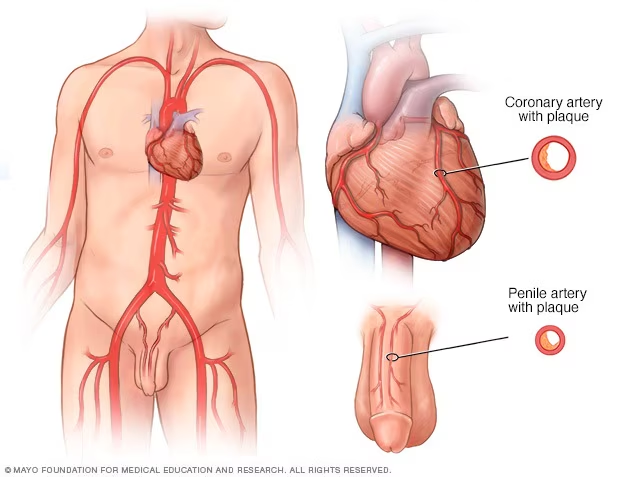
ED symptoms typically appear around 39 months — more than three years — before cardiac symptoms show up. Among young men aged 18 to 40 who present with erectile dysfunction, 19% have asymptomatic coronary artery disease that nobody knew about. Men with ED have a 1.62x higher risk of heart attack, a 1.39x higher risk of stroke, and a 1.25x higher risk of dying from any cause.
It doesn't stop at the heart. Men with ED have a 2x higher risk of undiagnosed diabetes, and 75% are diagnosed with prediabetes or type 2 diabetes within a year of their ED diagnosis. On the mental health side, 65% of men with ED have depression and 38% have anxiety — with men with ED being 3.4x more likely to be depressed.
The reason all these conditions overlap isn't coincidence. It's plumbing. Both cardiovascular disease and sexual dysfunction share the same underlying mechanism: endothelial dysfunction. The endothelium is the inner lining of your blood vessels. When it's damaged — by high blood sugar, high cholesterol, high blood pressure, smoking, or low testosterone — the vessels can't dilate properly, blood flow drops, and things stop working. The arteries supplying the penis are smaller than the coronary arteries, so they clog first. Your erection is literally the canary in the coal mine.
The Gateway Nobody Expected
Here's the irony that Dr Khera highlights: men are terrible at going to the doctor. Only 45% of men aged 18 to 39 had a routine health check in 2019. Half of young men with hypertension don't even know they have it.
But they will come in for sexual health. The average age of men seeking ED medication is 37, and 65% of ED medication users are under 45. These are young, otherwise healthy-looking blokes who wouldn't dream of booking a "wellness check" but will absolutely see a doctor when their erections aren't what they used to be.

That's the gateway. A bloke comes in for an ED script and walks out with a diagnosis of early-stage diabetes, uncontrolled blood pressure, or subclinical heart disease — conditions that would have gone undetected for years. Sexual health becomes the entry point for comprehensive preventive care.
Dr Khera's concern — and it's a legitimate one — is that direct-to-consumer telehealth services are short-circuiting this process. If a bloke can get a Viagra script from an app without a physical exam, blood work, or proper history, he gets the symptom treated but the underlying disease stays hidden. The erection works again, but the coronary artery disease keeps building silently. The gateway closes.
The Four Pillars
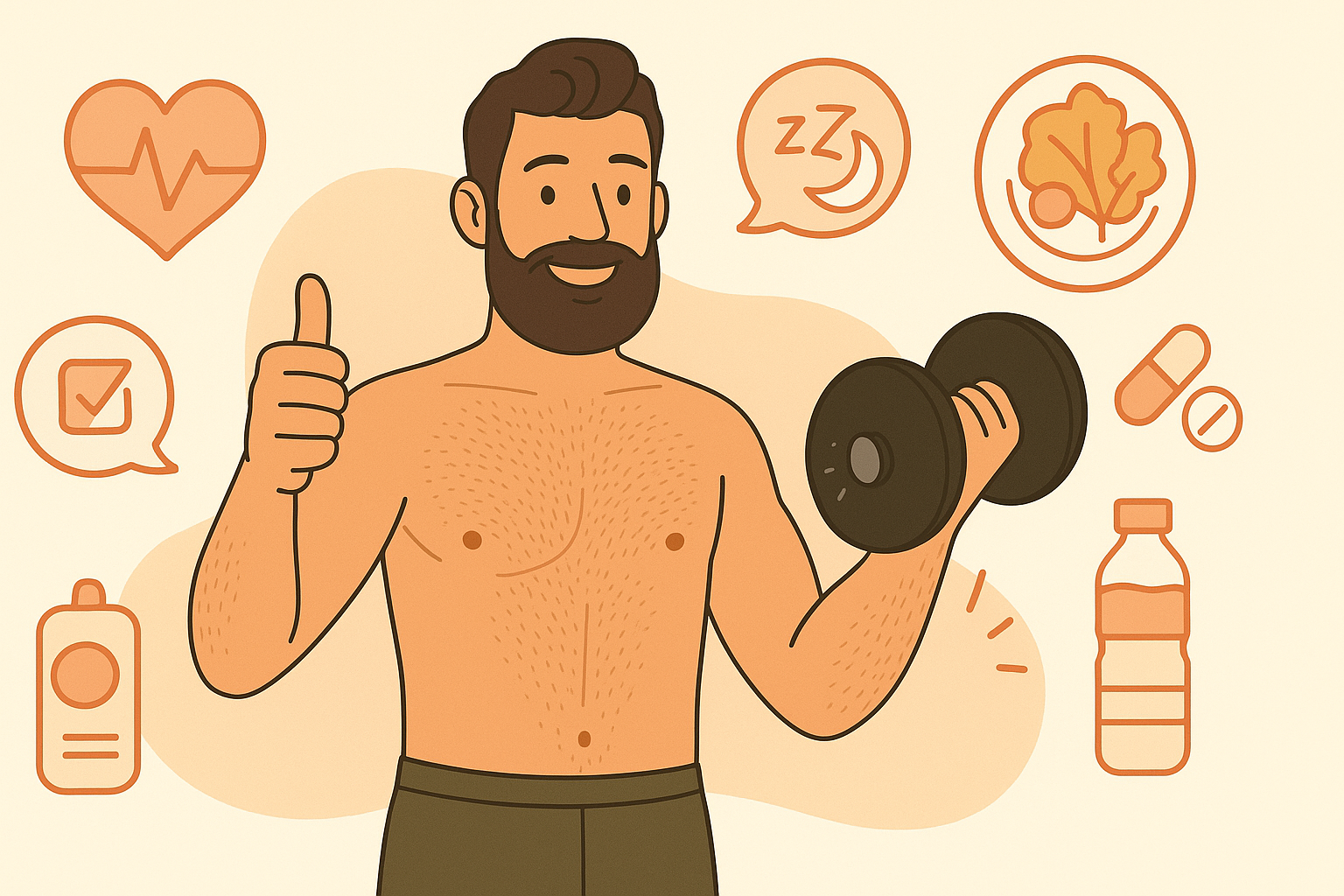
In order to maintain and prolong your sexspan, focus on the four pillars of health — diet, exercise, sleep, and stress reduction.
Dr Khera's framework for extending sexspan isn't complicated. It's the same four interventions that improve virtually every health outcome — but the evidence base for their sexual health benefits is specific and measurable.
Diet. A Mediterranean dietary pattern improved erectile function scores by 1.22 points and female sexual function scores by 1.18 points over eight years in clinical studies. This isn't marginal — it's a sustained, measurable improvement from food choices alone.
Exercise. Aerobic exercise produced an average 2.8-point improvement in erectile function scores, with even greater effects (4.9 points) in men with severe ED. Combining 10% weight loss with exercise improved scores from 13.9 to 17 — clinically significant. The mechanism is straightforward: exercise improves endothelial function, and better endothelial function means better blood flow everywhere, including where it matters most.
Sleep. This is the pillar that gets least attention and arguably matters most. Poor sleep suppresses testosterone, elevates cortisol, promotes insulin resistance, and impairs the nocturnal erections that maintain penile tissue health. Fixing sleep often improves sexual function before any other intervention gets a chance to work.
Stress reduction. Chronic stress suppresses the hypothalamic-pituitary-gonadal axis — the hormonal command chain that drives testosterone production. As Dr Khera puts it, when your body thinks you're under threat, it deprioritises reproduction. Managing stress isn't soft advice; it's endocrinology.
What makes these interventions powerful is that they don't just treat the symptom. They improve endothelial function — the shared root cause. Statins improve erectile function scores by 3.4 points independent of their cholesterol-lowering effect, purely through endothelial improvement. Daily tadalafil improves endothelial markers that persist three months after stopping the medication. Everything that helps your blood vessels helps your sexual function. Everything.
It's a Couple's Issue
One of Dr Khera's most distinctive points is that sexspan is not an individual metric. You must keep your partner engaged and healthy in order to prolong your own sexspan.

Sexual dysfunction in women is just as prevalent — 43 to 48% of women experience it — and just as connected to vascular health, metabolic health, and mental health. But only 19% seek therapy. If one partner's function declines and the other's is ignored, the relationship absorbs the strain, intimacy erodes, and both sexspans shorten.
The interventions work for both partners. The Mediterranean diet, exercise, sleep, and stress reduction improve female sexual function through exactly the same endothelial mechanisms. This isn't a men's health issue dressed up as a couple's issue — it genuinely is a shared project.
The Reframe
Dr Khera's proposition isn't really about sex. It's about using sexual health as the motivational hook that gets men to engage with their broader health — and then using the same interventions to improve everything at once.
Taking a proactive approach to prolonging your sexspan will also have significant improvements in your overall healthspan and lifespan.
Fix the endothelium for your erection, and you've also reduced your risk of a heart attack. Improve your insulin sensitivity for your libido, and you've also pushed back your diabetes risk by a decade. Manage your stress for your testosterone, and you've also improved your mental health. The entry point is sexual function, but the exit point is whole-of-body preventive medicine.
That's the power of the concept. Sexspan isn't a vanity metric. It's a trojan horse for getting blokes to care about their health.
Watch Dr Khera's TEDx talk "A Simple Approach to Prolonging Your Sexspan" — search "Mohit Khera TEDx sexspan" on YouTube, or catch his recent appearance on The Diary of a CEO podcast for the full deep-dive. His website is drmohitkhera.com.