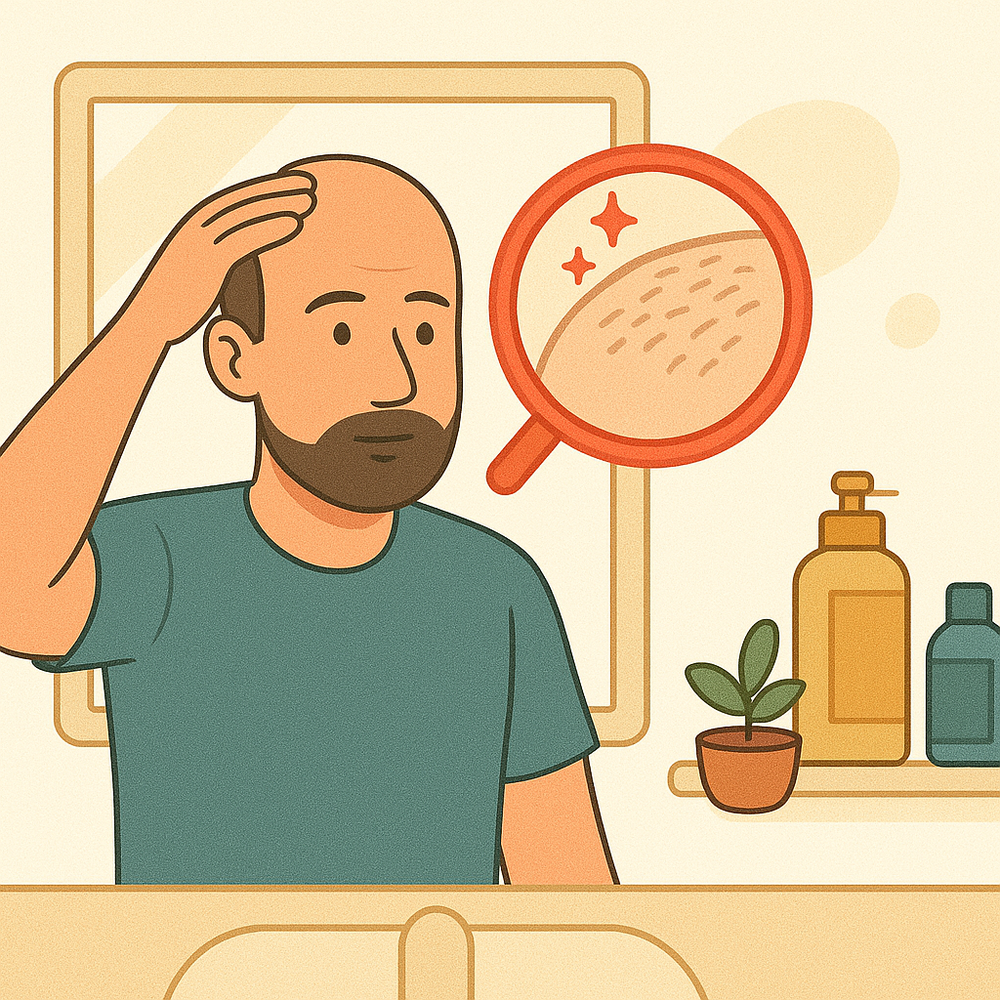
You noticed it in the shower drain. Or maybe in a photo from your mate's 40th. Or your partner mentioned it with that careful tone that means they've been sitting on the information for a while.
However it landed, the reality is the same: your hair is changing, and you're not sure what to do about it.
Here's the thing most blokes don't realise — hair loss is not one problem. It's a category of problems, each with a different cause, a different trajectory, and a very different set of solutions. Treating them all the same is why so many guys end up wasting money on shampoos that do nothing while the actual issue quietly keeps going.
So let's talk about what's real.
Why Hair Falls Out
Hair loss — the medical term is alopecia — happens when the normal growth cycle gets disrupted. Each hair follicle goes through a growth phase, a transition phase, and a resting phase before it sheds and regrows. That cycle runs roughly two to six years before a single hair falls out naturally.
When something disturbs that cycle — hormones, immune signals, stress, nutritional gaps — hairs shed earlier or follicles stop producing altogether. The type of disruption determines what kind of hair loss you're looking at.
And that distinction matters more than most men realise when they start Googling solutions at midnight.
The Four Types Worth Knowing
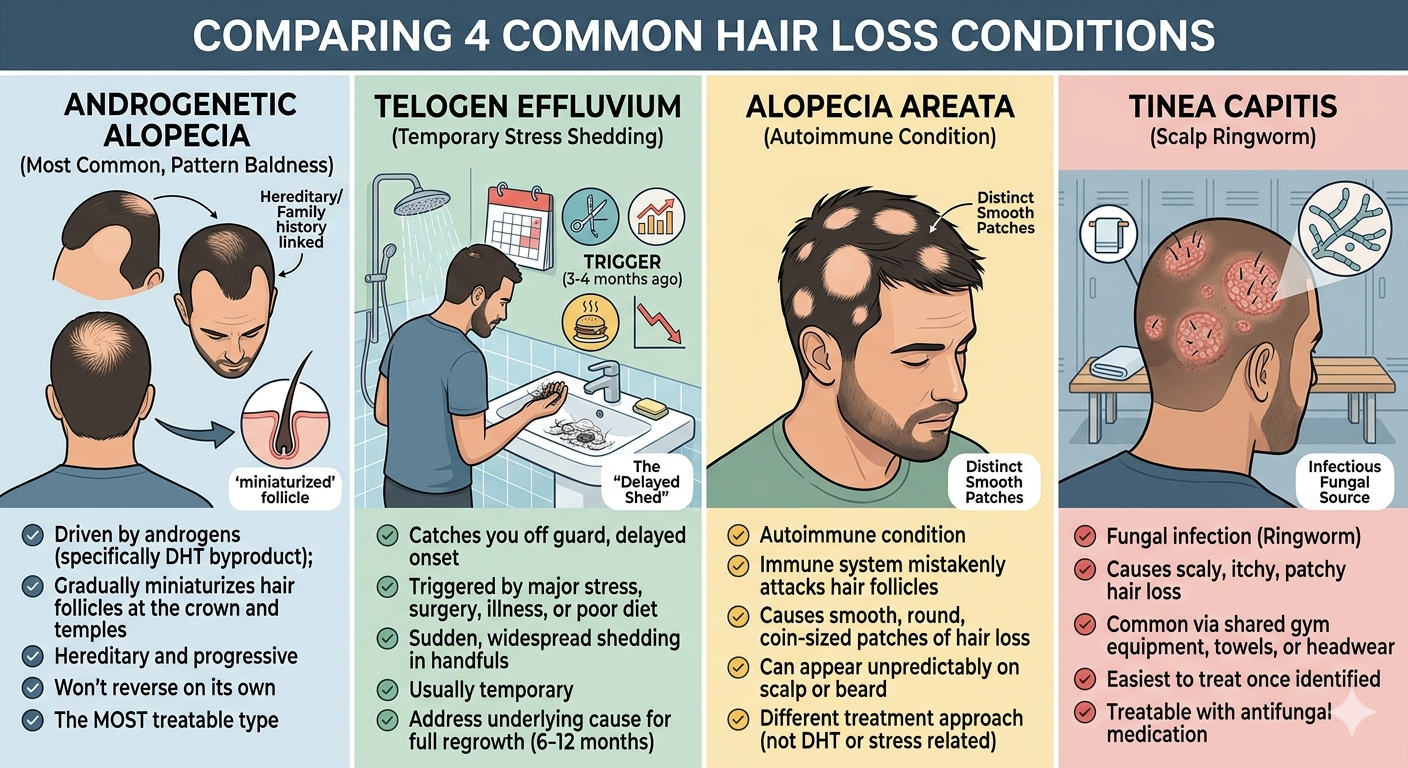
Androgenetic alopecia is the most common. If your dad or grandfather went thin on top, you've probably already done the maths. This is pattern baldness — driven by androgens, specifically a testosterone byproduct called DHT, which gradually miniaturises hair follicles at the crown and temples. It's hereditary, it's progressive, and it won't reverse on its own. But it is the most treatable type, which matters.
Telogen effluvium is the type that catches men off guard. You go through something major — surgery, illness, a brutal stretch of work stress, a period of poor eating — and then three to four months later, your hair starts shedding in handfuls. The delay is the cruel part. By the time you're losing hair, you've often forgotten the trigger. The good news: it's usually temporary. Address the underlying cause and most men see full regrowth within six to twelve months.
Alopecia areata is an autoimmune condition. Your immune system mistakes hair follicles for a threat and attacks them, causing smooth, coin-sized patches of loss — sometimes on the scalp, sometimes in the beard. It can come and go unpredictably, and it has nothing to do with DHT or stress-related shedding. It needs a different treatment approach entirely.
Tinea capitis — scalp ringworm — is a fungal infection that causes scaly, itchy, patchy hair loss. It's more common than people think, especially in blokes who use shared gym equipment or towels. It's also the easiest to treat once identified: antifungal medication works well.
The reason this matters: what fixes one type will do nothing — or actively make things worse — for another. Minoxidil won't treat a fungal infection. Antifungal shampoo won't stop DHT-driven pattern baldness. Getting the diagnosis right is step zero.
Getting a Proper Diagnosis
A GP or dermatologist will typically take your history — family patterns, recent life events, medications, diet — and examine your scalp. They're looking at the pattern of loss, not just the amount.
Blood work is often part of it: thyroid function, iron stores, vitamin D, and sometimes hormonal panels. Low ferritin (stored iron) is one of the most commonly missed contributors to hair loss in men, particularly those who've been training hard and not eating enough protein. Thyroid dysfunction is another that gets overlooked until someone actually runs the test.
A scalp biopsy is rarely needed, but if the pattern is unusual or the diagnosis isn't clear, a small skin sample can tell you exactly what's happening at the follicle level. It sounds more intense than it is.
The point is: a ten-minute consult and the right blood panel tells you more than any amount of online research.
What Actually Works
Treatment depends entirely on cause, but here's the honest rundown for the types men most commonly deal with.
Minoxidil is the one that's been around the longest. It's available over the counter in Australia as a topical solution or foam, and more recently as a low-dose oral tablet (which is showing good results in clinical settings). It works by prolonging the hair growth phase and improving blood flow to follicles. It won't regrow a follicle that's been dead for years, but it can stabilise loss and produce meaningful regrowth in follicles that are still active. You need to use it consistently — stopping it means losing whatever gains you made within a few months.
Finasteride is the prescription oral medication for male pattern baldness. It blocks the enzyme that converts testosterone to DHT, which is the primary driver of androgenetic alopecia. Studies consistently show it slows or stops progression in the majority of men, and about two-thirds see some regrowth. There are some concerns about sexual side effects — they occur in a small minority of users, can be reversible on stopping the drug, and should be discussed openly with your prescriber rather than avoided as a reason to skip treatment altogether. If DHT is the problem, finasteride targets it directly. Nothing else does this as effectively.
Corticosteroids are the go-to for alopecia areata. Injected directly into the affected patches, they calm the immune response that's attacking the follicles. For mild to moderate cases, the results are often significant. More widespread alopecia areata may need systemic treatment.
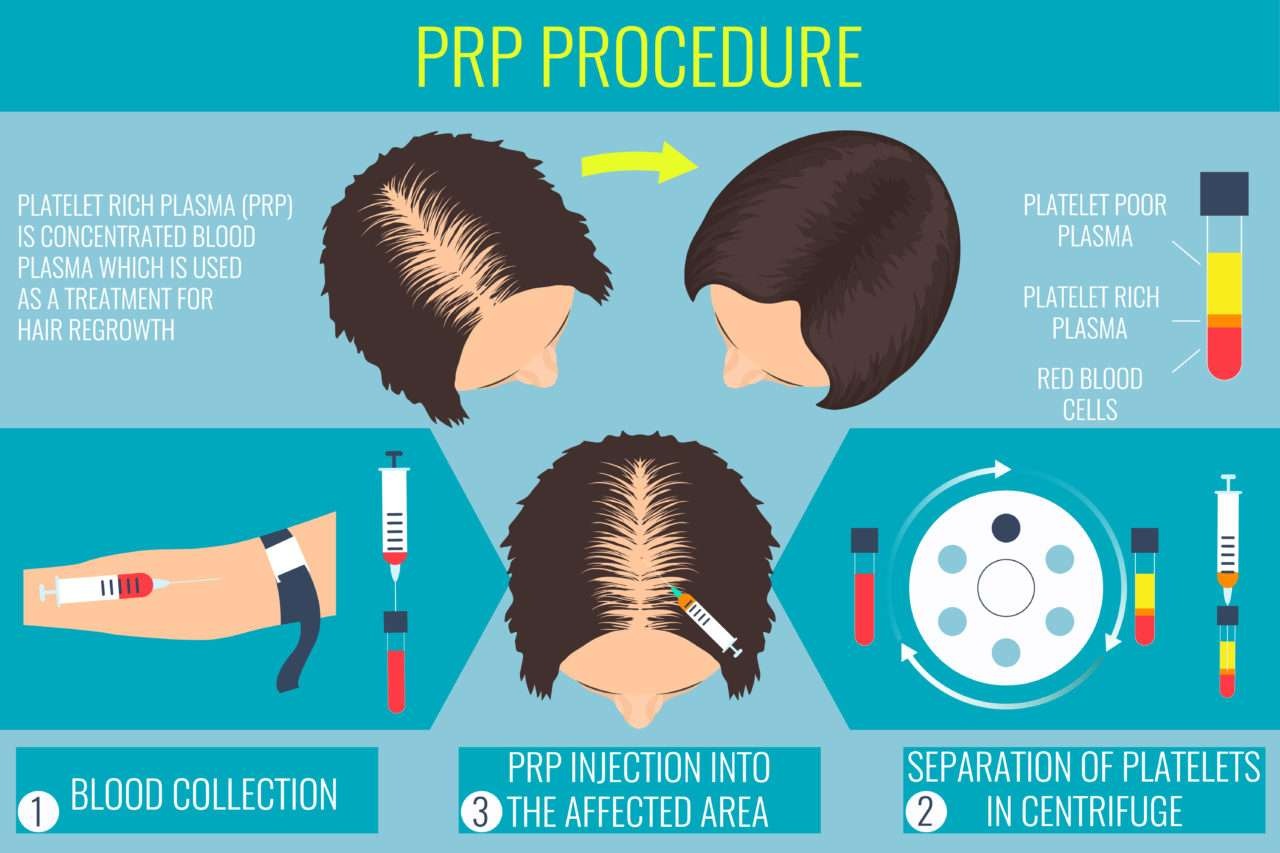
Platelet-Rich Plasma (PRP) therapy has grown in popularity and the evidence base is getting stronger. It involves drawing your blood, spinning it to concentrate the growth factors in the plasma, and injecting it into the scalp. It's not cheap, it typically requires multiple sessions, and it works better as a complement to other treatments than as a standalone. But for men already on minoxidil or finasteride who want to accelerate results, it's a reasonable add-on to discuss.
Hair transplantation is the surgical option and, done well, it's genuinely effective for pattern baldness. Modern FUE (follicular unit extraction) techniques leave minimal scarring and produce natural-looking results. The key qualifier: you need enough viable donor hair, and you need to have stabilised your loss first — otherwise you're transplanting into a situation that's still changing. It's a conversation to have once you've got the medical side dialled in.
The Lifestyle Stuff That Actually Matters
Most of the "natural hair loss remedies" circulating online are noise. But there are a handful of lifestyle factors with real evidence behind them.
Protein intake matters more than most men realise. Hair is primarily keratin — a protein — and follicles are metabolically active tissue. If you're under-eating protein, you're not giving your body the raw materials for hair growth. Aim for at least 1.6 grams per kilogram of bodyweight if you're active.
Iron and ferritin have a well-established link to hair shedding, particularly telogen effluvium. If you haven't had ferritin checked specifically (not just haemoglobin), ask for it. A ferritin level below 70 μg/L is associated with increased shedding in many patients, even without frank anaemia.
Stress is real. Chronic high cortisol disrupts the hair growth cycle and can tip susceptible follicles into the shedding phase. This doesn't mean meditating will reverse androgenetic alopecia — it won't. But if you're going through a brutal season and your hair is responding, addressing the stress source is part of the treatment.
Scalp care matters less than the industry would have you believe, but there is something to it. Keeping the scalp clean, avoiding harsh chemical treatments, and not wearing hairstyles that create constant tension on roots (traction alopecia is a real thing) all support the health of the follicle environment.
The Practical Truth
Hair loss is one of those things men tend to either panic about or ignore entirely. Neither helps.
The blokes who do best are the ones who get curious early, get a diagnosis rather than self-treating based on what their mate tried, and have an honest conversation with a doctor about what's achievable. Some types of hair loss are fully reversible. Pattern baldness won't reverse on its own, but it can absolutely be managed — most men can stabilise it if they start before the follicles have been gone too long.
The earlier you act, the more options you have. That's just biology.
If you're noticing changes, start with a GP appointment and a basic blood panel. Bring your family history and a rough timeline of when you first noticed the shedding. That's all you need to get the right information and make a plan that actually fits your situation.