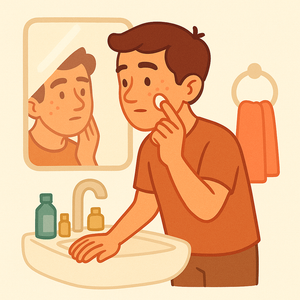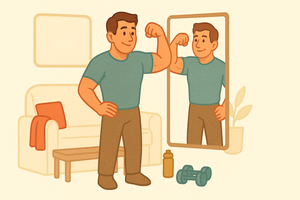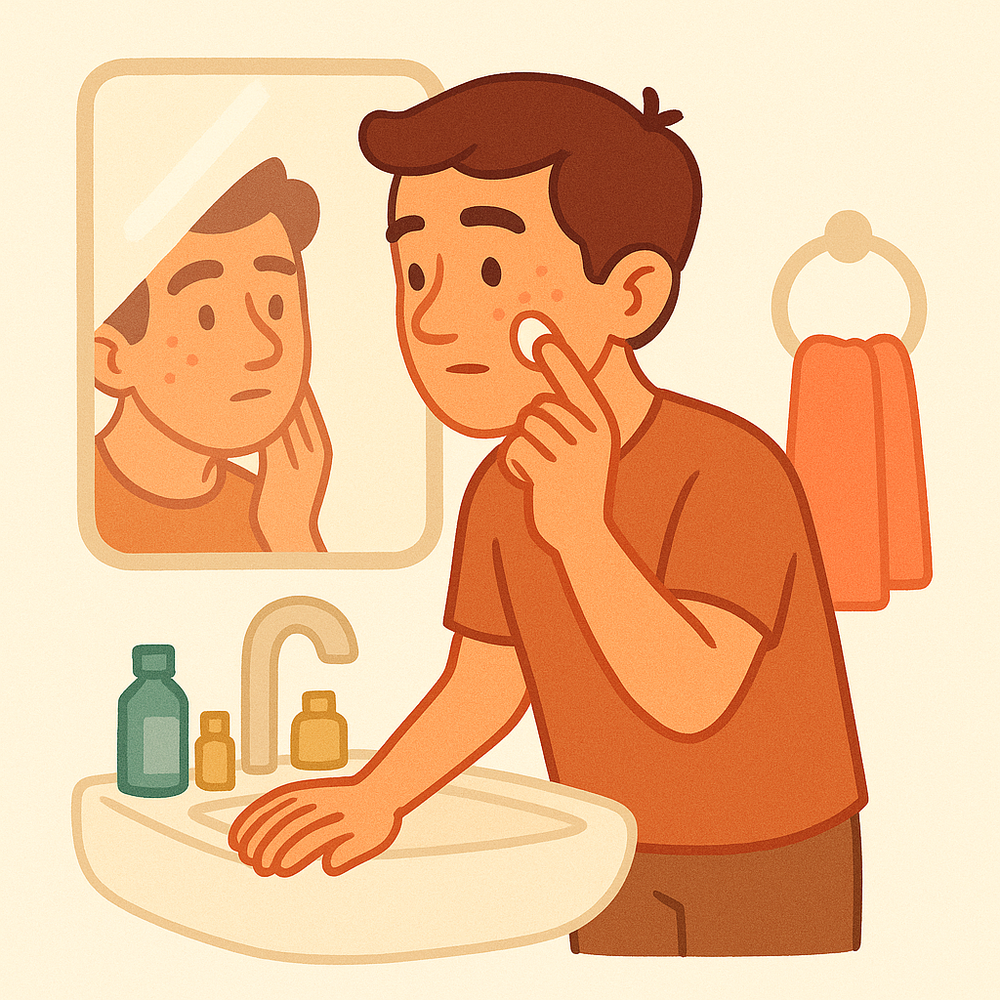
The internet's favourite term for male appearance optimisation — filtered through what the science actually supports. Here is a Top 10 tips on what works.
If you've spent any time on Reddit, TikTok, or men's health forums recently, you've encountered "looksmaxxing" — the idea that men can systematically optimise their physical appearance through targeted interventions. Strip away the memes and the occasionally unhinged supplement stacks, and there's actually a legitimate question at the core of it: what does the evidence say about what actually moves the needle on how men look?
The answer, as it turns out, maps surprisingly well onto what preventive and longevity medicine has been saying for years. Most of what genuinely improves male appearance is just good health optimisation done properly. The face, the skin, the body — they're not cosmetic accessories. They're readouts of your underlying biology.
Here are 10 interventions ranked roughly by strength of evidence and magnitude of effect — starting with the unsexy foundations and working up to the procedures.
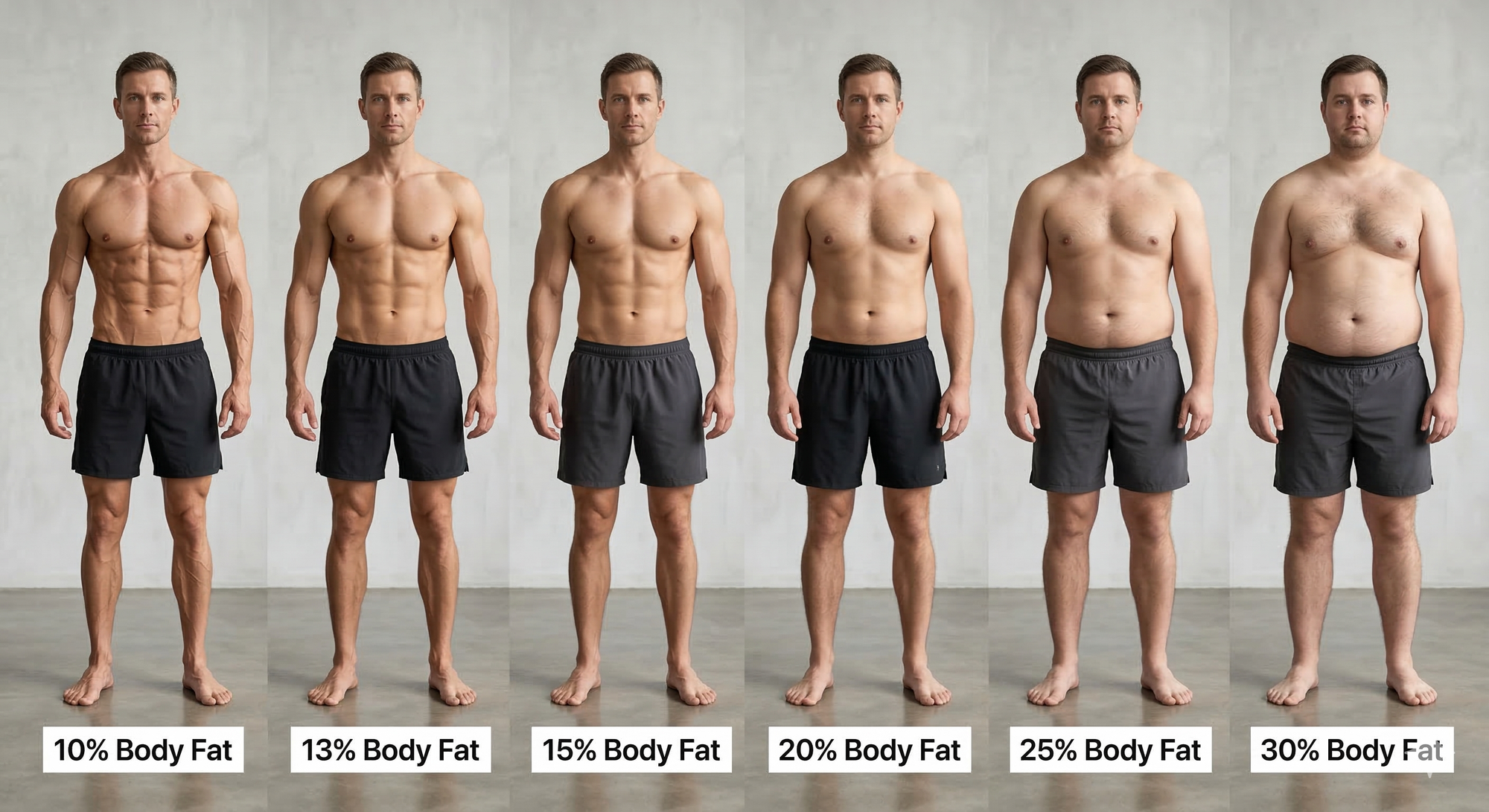
1. Get Your Body Composition Right
This is the single highest-yield intervention for male appearance, full stop.
Research published in Frontiers in Psychology found that the facial shape correlates of fat mass and muscle mass are distinct in men PubMed Central — meaning your face literally changes shape depending on whether you're carrying excess fat versus lean muscle. A Polish study in Archives of Sexual Behavior confirmed that men with higher adiposity were perceived as both less masculine and less attractive, while facial masculinity was positively associated with higher testosterone levels PsyPost.
The practical upshot: reducing body fat to the 12–18% range and building a reasonable base of lean mass will change your face more than almost any procedure. Think of it like revealing the bone structure that's already there — subcutaneous facial fat obscures your jawline and cheekbones the same way it obscures your abs.
Resistance training is the primary driver here. Testosterone is considered the major promoter of muscle growth and subsequent increase in muscle strength in response to resistance training in men PubMed. Compound lifts targeting large muscle groups (squats, deadlifts, rows, presses) with progressive overload 3–4 days per week is the evidence-based standard.
2. Wear Sunscreen Every Day
This is the most underrated intervention in the entire looksmaxxing conversation, and it has the strongest RCT evidence of anything on this list.
A landmark Australian randomised trial of 903 adults followed over 4.5 years found that regular sunscreen use retards skin aging in healthy, middle-aged men and women PubMed. A separate study showed that daily use of broad-spectrum sunscreen improved all photoaging parameters significantly from baseline as early as week 12, with skin texture, clarity, and pigmentation showing 40–52% improvement by week 52 PubMed — meaning sunscreen doesn't just prevent damage, it allows existing damage to partially reverse.
Here's the kicker for blokes: men's skin is about 25% thicker than women's due to androgen stimulation, and men have higher collagen density at every age Dermalogica. That means you age slower intrinsically — but men are less sun-savvy than women, meaning they don't use sunscreens as much, which could help explain why the "15 year" skin age difference is not readily noticed Dermalogica. You have a biological advantage and you're squandering it by not wearing SPF 50+.
A broad-spectrum, SPF 50+ sunscreen every morning — rain or shine, even if you're working indoors (UVA penetrates windows) — is the single best anti-ageing product you can own. In Australia and NZ, with our UV index, this is even more critical.
3. Fix Your Sleep
Sleep deprivation is the fastest way to look objectively worse, and the evidence here is unambiguous.
A Stockholm University study found that sleep-deprived individuals were perceived as having more hanging eyelids, redder eyes, more swollen eyes, darker circles under the eyes, paler skin, more wrinkles or fine lines, and more droopy corners of the mouth American Academy of Sleep Medicine. A separate study confirmed that chronic poor sleep quality is associated with increased signs of intrinsic ageing, diminished skin barrier function and lower satisfaction with appearance PubMed. And a French study demonstrated that even a sleep restriction lasting two nights can significantly affect hydration, trans-epidermal water loss, elasticity, and oxidation of facial skin ScienceDirect.
The mechanism is straightforward: sleep is when your skin repairs itself. Growth hormone peaks during deep sleep, driving collagen synthesis and cellular turnover. Cortisol rises with sleep deprivation, and cortisol degrades collagen. It's a double hit — less building, more destruction.
Aim for 7–9 hours of actual sleep (not just time in bed), with consistent timing. This matters more for your face than any serum.
4. Start a Prescription Retinoid
If sunscreen is defence, tretinoin is offence. Prescription-strength retinoids (vitamin A derivatives) remain the single most evidence-supported topical treatment for skin ageing, backed by decades of RCT data.
Retinoids accelerate epidermal cell turnover, stimulate collagen synthesis in the superficial dermis, reduce fine lines, even out pigmentation, and improve overall skin texture. For men, the thicker stratum corneum means you can generally tolerate stronger formulations than many women can.
Start low (0.025% tretinoin), apply every other night, and build up. Expect 12–16 weeks before visible results. The catch: retinoids increase photosensitivity, which makes tip #2 (sunscreen) non-negotiable.
5. Optimise Your Hormonal Health
This isn't about chasing supraphysiological testosterone levels. It's about ensuring you're not functionally deficient — which a surprising number of men in their 30s and 40s are, particularly if they're carrying excess body fat, sleeping poorly, or chronically stressed.
Research consistently shows that women perceive men with lower adiposity as more attractive, while facial masculinity is positively associated with higher testosterone levels PsyPost. Testosterone during puberty causes growth of the jaw, brow, chin and nose PubMed Central — you can't change your bone structure in adulthood, but maintaining healthy testosterone levels supports the soft tissue (skin quality, muscle mass, fat distribution) that sits on top of it.
The first-line approach is lifestyle: resistance training, adequate sleep, stress management, maintaining healthy body fat. If you've optimised those and still have symptoms consistent with hypogonadism, get a proper workup — total testosterone, free testosterone, SHBG, LH, FSH. Evidence-based management exists for men who genuinely need it.
6. Build a Minimalist Skincare Routine
Beyond sunscreen and retinoids, the evidence supports a simple, consistent routine rather than a 12-step regimen. For men, this means:
A gentle cleanser (non-foaming, pH-balanced) to manage the higher sebum production that comes with male skin. A moisturiser — even oily skin benefits from barrier support, and men have a rougher skin texture and thicker stratum corneum Dermalinstitute that benefits from hydration. And a vitamin C serum (L-ascorbic acid, 10–20%) in the morning under sunscreen — this has good evidence for photoprotection synergy and mild brightening.
That's it. Cleanser, vitamin C, sunscreen in the morning. Cleanser, retinoid at night. Everything beyond this is marginal.
7. Maintain Your Teeth and Oral Health
This one gets overlooked in the looksmaxxing discourse, but it shouldn't. Straight, white, well-maintained teeth are consistently ranked among the top factors in facial attractiveness research. A bright, symmetrical smile draws visual attention and conveys health.
If your teeth are crowded, stained, or damaged, this is a high-ROI intervention: professional cleaning twice yearly, whitening (either in-chair or custom tray), and orthodontics (clear aligners have made this much more accessible for adults) if alignment is an issue. It's also one of the few appearance interventions that has compounding health benefits — periodontal disease is independently associated with cardiovascular risk.
8. Consider Microneedling for Texture and Scarring
If you've got acne scarring, enlarged pores, or uneven texture — common in men given our higher sebum production and often-delayed skincare adoption — microneedling (collagen induction therapy) has a solid evidence base.
The procedure creates controlled micro-injuries that trigger a wound-healing cascade, generating new collagen and remodelling the dermal matrix. For acne scarring specifically, the evidence is more robust than for general "anti-ageing." Multiple studies show significant improvement in scar depth and skin texture over 3–6 sessions spaced 4–6 weeks apart.
The addition of PRP (platelet-rich plasma) is popular but the evidence is genuinely mixed — a Mayo Clinic RCT found no notable difference between PRP and saline control for facial skin rejuvenation PubMed Central. Save your money on the PRP add-on unless you're specifically treating scars where the evidence is more supportive.
9. Address Your Posture
Forward head posture, rounded shoulders, and thoracic kyphosis — the classic "desk worker" posture — changes how your face and jaw are perceived. When your head sits forward, your mandible drops, your submental angle increases (double chin appearance), and your overall silhouette reads as less confident and less physically capable.
Female preferences favour male figures with a medium body mass index and a pronounced upper body v-shape ScienceDirect — and you can't display that v-shape if you're hunched over. Posture correction through targeted strengthening (face pulls, rows, external rotation work) and mobility work is free, has no downtime, and changes your appearance immediately.
10. Explore Energy-Based Treatments for Specific Concerns
If you've nailed tips 1–9 and want to go further, evidence-based skin procedures exist for specific issues:
Fractional CO₂ laser for significant photodamage, acne scarring, or textural concerns. Expert consensus identifies the ideal candidate as 40–60 years old with moderate sun damage. Expect 5–10 days of social downtime but meaningful, long-lasting improvement.
Micro-focused ultrasound (Ultherapy) for mild-to-moderate skin laxity along the jawline and neck — it's the current gold standard for noninvasive skin lifting Journal of Clinical and Aesthetic Dermatology, delivering focused energy to the SMAS layer (the same layer a facelift targets). Results develop gradually over 3–6 months.
Polynucleotide injectables (like Rejuran) are a newer option for overall skin quality improvement. Polynucleotide injections have shown promising outcomes in reducing wrinkles, improving skin texture, and enhancing elasticity Wiley Online Library, though the evidence base is still maturing with larger trials needed.
These are legitimate, evidence-supported interventions — but they're the icing, not the cake. A man with 25% body fat, chronic sleep deprivation, and no sunscreen habit will get minimal return from a $3,000 laser treatment. Fix the foundations first.
The Bottom Line
The looksmaxxing community has stumbled onto something real: male appearance is optimisable, and it matters — for confidence, for social dynamics, for how you feel when you look in the mirror. Where the online discourse often goes wrong is in prioritising expensive, dramatic interventions (mewing, bone-smashing, dubious supplements) over the boring stuff that actually works.
The evidence says: get lean and strong, protect your skin from the sun, sleep properly, maintain your hormonal health, and build a simple skincare routine. That's 80% of the result for 20% of the effort. Everything else is refinement.
Your face is a readout of your biology. Optimise the biology, and the face follows.