
Walk past any wellness precinct in Sydney, Melbourne, or Auckland right now and you'll find a clinic offering to hang a bag of vitamins over your arm for $200–$600 a session. The testimonials are glowing. The Instagram content is aspirational. The waiting rooms are full of people who look like they already eat well and exercise regularly.
The pitch is simple: your gut is an inefficient absorber, bypassing it gives you 100% bioavailability, and you'll feel noticeably better within hours.
Some of that is true. Some of it is marketing. And a handful of these ingredients have genuinely solid clinical cases behind them.
Here's what's actually in the bag.
Why IV at All?
The bioavailability argument isn't wrong — it's just incomplete. Your gut does a reasonable job absorbing most nutrients, but not a perfect one. Fat-soluble vitamins need dietary fat present to absorb. Some B vitamins compete for the same transport receptors. People with gut conditions, absorption issues, or established deficiencies may genuinely struggle to correct their levels through oral supplementation alone.
IV bypasses all of that. What's in the bag goes directly into your bloodstream. That's a real pharmacological advantage — when it matters.
The question worth asking is: for which nutrients, in which people, does that advantage actually translate into a meaningful clinical benefit?
The Menu, One by One
NAD+ — The Longevity Darling
NAD+ (nicotinamide adenine dinucleotide) sits at the centre of cellular energy metabolism and DNA repair. It's the fuel that drives sirtuins — a family of proteins involved in regulating inflammation, metabolic function, and how cells respond to stress. It also feeds PARP enzymes, which are essentially your DNA's repair crew. Levels decline with age, meaningfully so: by your mid-50s you may have roughly half the NAD+ you had at 20.
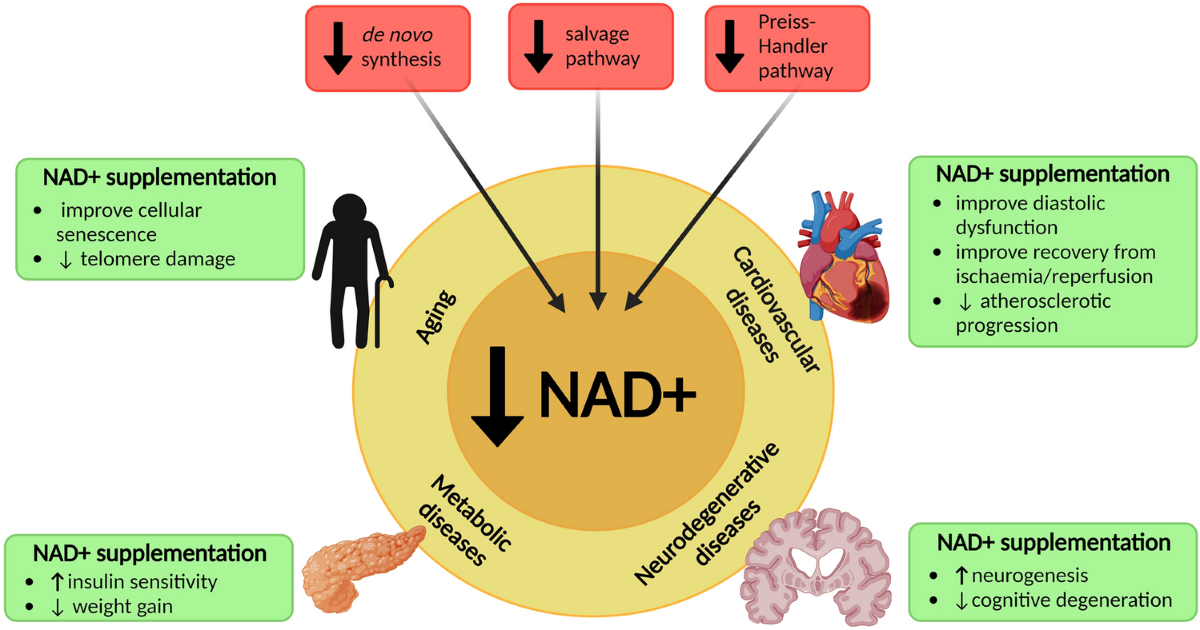
Restoring those levels — in animal models — has produced legitimately interesting results. Older mice given NAD+ precursors show improvements in muscle function, metabolic health, and even cognitive performance. The science here isn't fringe; it's the subject of serious research at places like Harvard Medical School and the Sinclair Lab.
The problem is the leap from compelling mouse studies to a $500 IV bag at a wellness clinic.
IV NAD+ does have one well-established clinical application: addiction medicine. It's been used for decades — the Birkmayer protocol, originally developed in South Africa — as an adjunct to opioid and alcohol withdrawal, where it appears to reduce cravings and ease the acute phase of detox. That's a specific, monitored clinical setting, not a Tuesday afternoon at a day spa.
For healthy adults seeking longevity benefits, the human RCT data is thin. Small trials exist. Promising signals are emerging. But we don't yet have the large, well-controlled studies that would justify the cost — which, for the record, often includes a fairly unpleasant infusion experience. Nausea, chest tightness, a flushing sensation that builds as the rate goes up. Clinics that run it slowly (over two to four hours) report fewer reactions; anyone pushing it faster is cutting corners.
If you're interested in the NAD+ biology, oral precursors are worth understanding. NMN (nicotinamide mononucleotide) and NR (nicotinamide riboside) both raise NAD+ levels in humans — NMN has the more recent and slightly more robust trial data, including a 2023 human RCT showing measurable increases in muscle NAD+ and improved muscle function in older adults. Neither is cheap, but both are significantly more accessible than an IV clinic. The IV route may eventually prove superior for specific clinical indications — there's theoretical support for it. Right now, it's running ahead of its evidence base.
Bottom line: Interesting science, one legitimate clinical use case in addiction medicine, premature application for general wellness. Oral precursors are a more evidence-supported starting point.
Iron Infusions — The One With Actual Evidence
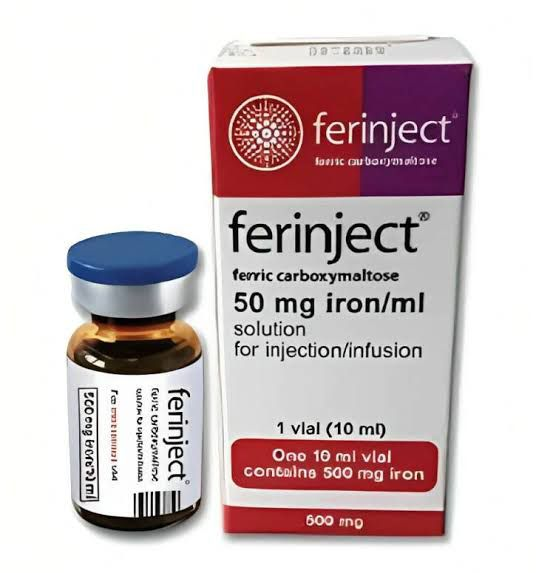
This is the outlier on the menu. Iron infusions aren't wellness — they're medicine.
For people with iron deficiency anaemia who can't absorb oral iron or can't tolerate it (the GI side effects are genuinely brutal for many people), intravenous iron like ferric carboxymaltose — Ferinject, if you've seen it on a prescription — is a well-established, evidence-backed treatment. It rapidly restores iron stores, resolves symptoms, and gets people off the oral supplementation treadmill.
Appropriate indications include inflammatory bowel disease, post-bariatric surgery, pregnancy-related deficiency, and heavy menstrual blood loss. Some are PBS-subsidised when prescribed by a GP with a confirmed diagnosis.
If you're getting iron infusions at a wellness clinic for general fatigue — without a confirmed ferritin and haemoglobin workup — you're spending real money on something that may not be indicated, and you're skipping a diagnosis conversation that might actually explain why you're tired in the first place.
Bottom line: Strong evidence, legitimate medical treatment. Should be GP-prescribed and monitored, not self-referred.
High-Dose Vitamin C — The Cancer Claim
Linus Pauling — two-time Nobel laureate, serious scientist — staked his later career on the idea that IV Vitamin C could treat cancer. The subsequent Mayo Clinic trials didn't replicate his results and it fell out of mainstream favour for decades.
It's back in conversation now, but with a more measured claim: not as a cancer treatment, but as a potential adjunct to chemotherapy. Several Phase II trials suggest IV Vitamin C alongside standard treatment may reduce certain side effects and improve quality of life during treatment. That's not quackery. It's also not yet standard of care.
For healthy people chasing an "immunity boost": oral Vitamin C saturates plasma levels at around 200mg per day. IV achieves dramatically higher concentrations — but there's no good evidence those higher concentrations do anything meaningful in someone who isn't already deficient or immunocompromised.
Bottom line: Genuinely worth discussing with your oncologist if you're in active cancer treatment. Limited evidence for wellness use in healthy adults.
Glutathione — The Antioxidant Pitch
Glutathione is often described as your body's master antioxidant, and that's not an exaggeration. Oral absorption is genuinely poor, which does make the IV route a pharmacologically logical choice.
In clinical medicine, it has legitimate applications — liver conditions, acetaminophen toxicity, certain neuropathies. There's also a large market for IV glutathione as a skin-lightening agent, which carries its own ethical and regulatory complications that are worth knowing about.
For general wellness and anti-ageing? The evidence is thin. The biology is plausible — oxidative stress does accumulate with age and illness — but plausible biology doesn't equal a proven clinical benefit.
Bottom line: Interesting molecule, specific medical uses, weak wellness evidence.
B12 and Vitamin D Injections — When They Actually Make Sense
These two are worth pairing because they follow the same logic: injectable delivery is clinically superior — but specifically when there's an established deficiency to correct.
B12 deficiency is more common than most people think, particularly in adults over 50, long-term vegans, anyone on metformin, and people with pernicious anaemia. Oral B12 supplementation works for mild deficiency; intramuscular injection is faster and more reliable when levels are significantly low or absorption is impaired.
Vitamin D deficiency is widespread across southern Australia and New Zealand — think desk workers, people who cover up, anyone living south of Brisbane. Most cases correct adequately with daily oral supplementation over a few months. A high-dose intramuscular injection (Stoss therapy) can accelerate that correction, which is clinically useful when you need levels up faster.
The important caveat on both: if your levels are already within normal range, adding more doesn't make you "more healthy." You'll excrete the excess. The benefit lives entirely in correcting a documented deficiency.
Bottom line: Clinically sound when there's a confirmed deficiency. Unnecessary — and at high doses, potentially harmful — when levels are already normal.
Magnesium, Zinc, and B-Group Vitamins — The Cocktail Ingredients
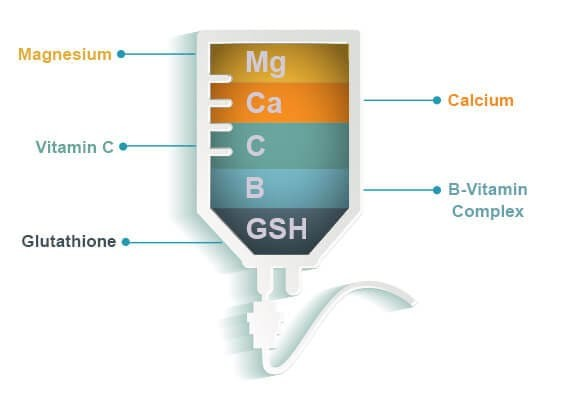
These tend to appear together in the Myers' cocktail — the original IV drip formula combining B vitamins, Vitamin C, magnesium, and calcium. It's been around since the 1970s and is one of the most commonly administered IV nutrient therapies in Australia.
Small studies exist on Myers' cocktail, mostly for fibromyalgia and chronic fatigue. The quality is low. The effect sizes are modest. Oral magnesium in decent forms — glycinate or malate — absorbs well for most people. Zinc IV is rarely necessary outside critical illness or severe malabsorption. B-group vitamins in someone eating a varied diet are largely going to be excreted.
None of these are harmful at wellness-clinic doses. But if you're spending $300+ a month on a magnesium infusion, a decent supplement stack and some dietary attention would likely get you the same outcome for considerably less.
Bottom line: Low risk, probably no meaningful advantage over well-chosen oral supplementation for most people.
A Note on Regulation
In Australia, the TGA regulates the medicines themselves, but IV nutrient therapy clinics operate in a space where clinical governance — who's prescribing, who's monitoring, what's the follow-up — varies significantly between providers. That's not an argument against IV therapy; it's an argument for knowing who's administering it and whether there's a genuine clinical rationale behind what you're being offered.
A wellness clinic that orders baseline bloods before recommending anything is a different proposition to one that defaults every client to the same $450 package.
The Short Version
| Ingredient | Evidence Level | Worth It? |
|---|---|---|
| NAD+ | Thin in humans | Watch this space |
| Iron | Strong | Yes — if clinically indicated |
| High-dose Vitamin C | Emerging (oncology context) | Maybe, with specialist guidance |
| Glutathione | Weak for wellness | Unclear |
| B12 | Strong | Yes — if deficient |
| Vitamin D | Strong | Yes — if deficient |
| Magnesium / Zinc / B-group | Weak for IV route | Oral is probably fine |
So, Should You Get One?
If you're booking a drip because you're curious, you can afford it, and you've got an afternoon free — the risk profile for most of these ingredients at wellness doses is genuinely low. You're unlikely to do yourself harm.
But if you're booking because you're chronically fatigued, mentally foggy, or trying to address something that's been bothering you for a while — a conversation with a GP who'll actually run bloods first will do more for you than anything hanging from a drip stand.
Some of these ingredients are legitimate medicines with real clinical utility. They work best when they're the right intervention for the right person — not the default offering for anyone who walks through the door.
Start with the diagnosis. The drip can wait.